Reputation Management: Every Star Counts — How Online Reviews Directly Drive Hotel Revenue

The Rating Slide Nobody Noticed — Until Bookings Did
A hotel manager was proud of his occupancy numbers. Month after month, the property held steady. Then, without any obvious reason, conversions started to slow. Rates hadn't changed. The location was the same. The rooms were the same. So what was different?
A quick check of the property's TripAdvisor page told the whole story. The rating had quietly slipped from 4.7 to 4.4 over the previous six months. A string of negative comments — unclean rooms, slow Wi-Fi, unresponsive staff — had accumulated without a single reply from management. New guests were reading those reviews and either booking elsewhere or expecting steep discounts before they would commit.
The problem wasn't the hotel. It was perception — and perception, in the hospitality industry, is revenue.

This is the reality that revmerito works with every day. Online reputation is not a PR exercise. It is a direct line into your booking curve, your achievable rate, and your RevPAR performance. Treating it as anything less is leaving money on the table, one unanswered review at a time.
Why Online Reputation Is a Revenue Variable, Not a Vanity Metric
Most hotel operators track ADR, occupancy, and RevPAR obsessively. Fewer treat their average review score with the same discipline — despite the fact that the numbers connecting the two are well established.
Research consistently shows that the overwhelming majority of travelers read hotel reviews before making a booking decision. One study found that 83% of travelers check reviews at least occasionally before choosing accommodations. That is not a niche behaviour. That is the default state of the modern traveller. Your online reputation is the first filter your potential guests pass through before your rate, your location, or your photos ever come into play.
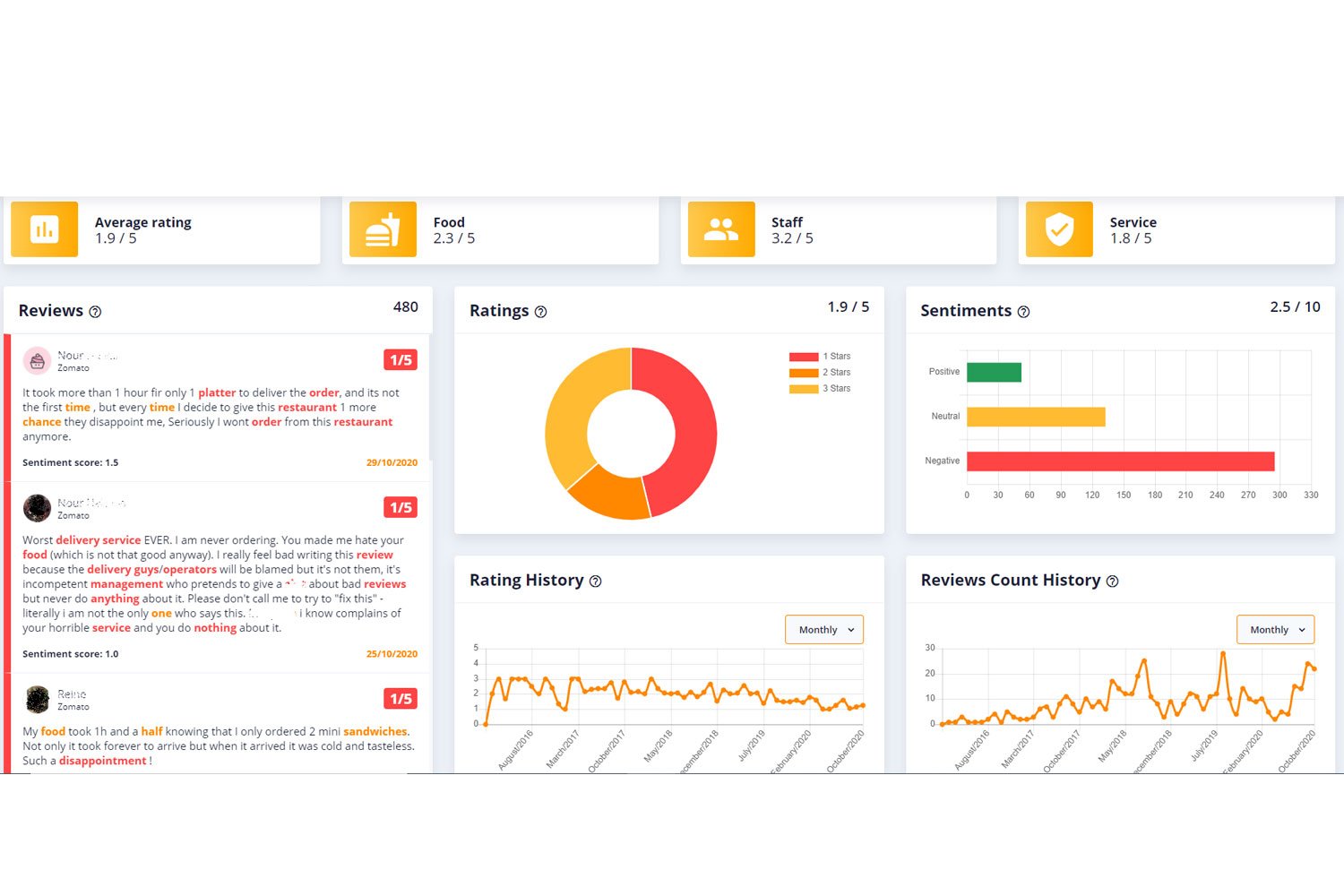
The revenue mechanics are equally clear. A 0.1-point increase in your average review score can produce roughly a 1–2% lift in revenue. Scale that across a full year of room nights, and a number that sounds trivially small translates into meaningful additional income. At the other end of the scale, every full-star increase — from 4.0 to 5.0, for example — has been associated with revenue gains of between 10% and 20%. Every unanswered complaint, every ignored OTA review, every pattern of operational failure that guests are flagging without a response, is quietly compounding against your RevPAR.
The hotel in our opening scenario had no systematic process for managing guest experience feedback. Nobody owned the review channel. Nobody was closing the loop with guests after a negative experience. The result was a predictable one: the OTA algorithm deprioritised the listing, the metasearch conversion rate fell, and the property found itself cutting rates to compete — the exact opposite of where strong reputation management takes you.
The Anatomy of a Reputation Turnaround
When revmerito took on this property, the approach was methodical. Reputation recovery is not complicated. It is consistent.
Step One: Train the Team and Establish Ownership

The first thing that had to change was accountability. Someone — a specific person, not a department — had to own the review response function. Every incoming review, across every platform, needed to be seen within 24 hours and responded to within 48.
Staff were trained on what a good response actually looks like. For positive reviews, the goal is warmth and personalisation — not a copy-paste template that guests can spot immediately. For negative reviews, the formula is simple: acknowledge the specific complaint, apologise without being defensive, explain what is being done about it, and invite the guest back. Empathy is not weakness. A well-crafted response to a bad review often does more for guest experience trust than the five-star reviews surrounding it.
Step Two: Fix What Guests Are Actually Telling You
Review data is one of the most underused operational intelligence tools in the hotel industry. Guests will tell you exactly what is wrong with your property — and they will do it in detail, in public, for free.
In this case, two operational issues were surfacing repeatedly: Wi-Fi reliability and room cleanliness standards. Both were addressed directly. The Wi-Fi infrastructure was upgraded. Housekeeping protocols were tightened. These are not glamorous interventions. But they are the interventions that stop the same complaint from appearing in the next hundred reviews.
Fixing operational issues without responding to the reviews that flagged them is only half the job. The follow-through — both in the response and in the actual service delivery — is what breaks the cycle.
Step Three: Build Review Volume Proactively
A property with 50 reviews sitting at 4.4 is far more vulnerable to negative swings than a property with 500 reviews sitting at 4.4. Volume is protection. It is also, frankly, a signal to the OTA algorithm that the property is active and engaged.
The team implemented a post-stay outreach process — a brief, personalised message to guests who had checked out, thanking them for their stay and inviting them to share their experience on TripAdvisor, Google, or the relevant OTA platform. The request was genuine, not aggressive. Guests who had already had a good stay were simply being given an easy path to share that feedback.
The effect on review volume was immediate. The effect on the rating followed within weeks.
Step Four: Monitor Everything in One Place
One of the consistent failures in hotel reputation management is fragmentation. Reviews come in from TripAdvisor, Google, Booking.com, Expedia, MakeMyTrip, and a dozen other channels. Without a centralised monitoring tool — a reputation management platform that aggregates incoming reviews across all sources — things fall through the cracks.
The property was onboarded onto a review management platform that gave the team a single dashboard view of all incoming feedback, response rate tracking, and sentiment trends over time. Nothing slipped through. Response rate climbed to above 90% within the first month.
Step Five: Leverage Your Rating Where It Can Drive OTA Conversion
A rising score is a marketing asset. It belongs on your website, in your OTA listing description, on your social media profiles, and in your email communications to returning guests. The property began prominently featuring its TripAdvisor Travellers' Choice badge and its improving score across all guest-facing touchpoints — reinforcing the trust signal that the reviews themselves were creating.
What the Numbers Looked Like After Six Months
The results from this property were not unusual for a systematic reputation turnaround. They are simply what happens when a hotel starts taking guest experience feedback seriously as a business function.
Within six months, the overall rating had climbed from 4.4 back above 4.6 — recovering the ground it had lost and continuing to improve. OTA and metasearch conversion rates increased without any change to the rate strategy. The property estimated a 3% occupancy lift attributable directly to improved trust, with an additional benefit from being able to hold rates closer to the premium tier without losing price-sensitive guests.
In net revenue terms, the combination of higher occupancy and improved RevPAR translated into significant additional room revenue annually — all from a series of operational changes that cost far less than any paid marketing campaign.
Guests who had experienced the new responsiveness explicitly commented on it. Reviews began to mention not just the physical quality of the stay, but the sense that management genuinely cared. That perception — that you are a hotel that listens — is one of the most durable competitive advantages in the business.
The KPIs That Tell You Where You Stand
If you are not measuring your reputation with the same rigour you apply to RevPAR, you are flying partially blind. The metrics that matter are straightforward.
- Average Review Score — Track this weekly across all platforms using a tool like TrustYou or your OTA channel manager. A downward trend over four weeks is a signal that something operational has changed and needs investigation.
- Response Rate — Your response rate to reviews is both a ranking signal on OTAs and a visible indicator of management engagement to prospective guests. Target above 90%. Below 70% and you are losing ground.
- Review Volume — Are you generating consistent new reviews, or has inflow stalled? Volume protects you against negative swings and signals activity to platform algorithms.
- OTA and Metasearch Conversion Rate — Correlate this against your review score trend. A conversion rate that drops alongside a score decline is one of the clearest signals that reputation is costing you bookings.
- Repeat Booking Rate — Guests who feel heard come back. If your repeat rate is stagnant despite solid occupancy, the guest experience — and how it is being managed post-stay — may be the lever to pull.
What Most Hotels Get Wrong About Reputation Management
The single most common mistake is treating reputation management as reactive. A bad review appears, someone responds, and then the process stops until the next bad review. There is no pattern analysis. There is no operational follow-through. There is no proactive volume-building. And there is no tracking of whether the response rate, the score, and the conversion rate are moving together.
The second most common mistake is genericness. Template responses — "Thank you for your feedback, we are sorry to hear about your experience" — are worse than no response in many cases. They signal that nobody actually read the review. Guests and prospective guests can tell the difference.
Reputation management that actually moves RevPAR is personalised, consistent, operationally integrated, and measured. It treats the review channel as a two-way communication tool with guests, not a liability management exercise.
Key Takeaways
- Act on every review. Respond promptly and personally. Fix the operational issues that guests are flagging. Close the loop with the guest who raised the complaint. Every unanswered review is a missed opportunity — both to recover a relationship and to signal to future guests that you are paying attention.
- Build volume deliberately. Ask satisfied guests to share their experience. Make it easy. Do it consistently. Volume is protection and it is visibility.
- Promote your scores as a trust asset. Your TripAdvisor rating, your Booking.com score, your Google rating — these belong in your marketing. Feature them prominently on your website and OTA pages.
- Track the connection between reputation and revenue. Correlate your review score trend against your OTA conversion rate and RevPAR on a monthly basis. The relationship will show up in the data within one quarter.
- Remember: even 0.1 points compound. A small, sustained improvement in your average score — driven by consistent operational excellence and active review management — translates into measurable RevPAR gains over time. This is not a vanity exercise. It is a revenue strategy.
Let revmerito Manage Your Online Reputation
At revmerito, we treat your review score as a revenue metric — because that is exactly what it is. Our reputation management service covers response management, review volume strategy, operational insight reporting, and integration with your OTA and metasearch performance data.
If your scores are slipping, your conversion rate is stalling, or you simply do not have the bandwidth to manage the review channel the way it deserves, we can help. We have done this before. We know what moves the needle.
Let revmerito manage your online reputation — we will get those scores, and profits, up together.