What Is Data-Driven Hotel Revenue Management In 2026?
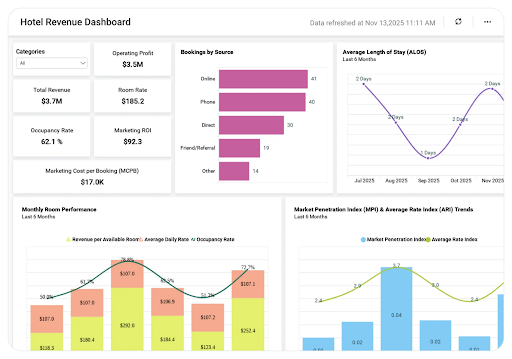
For years, hotel pricing was built on last year's occupancy report and a revenue manager's gut feel for the season. That instinct still matters, but on its own it can no longer explain why RevPAR moved the way it did in early 2026. The U.S. hotel industry entered the year on a cautious forecast, STR and Tourism Economics initially projected just 0.6% RevPAR growth for 2026, after 2025 closed with the first non-recessionary RevPAR decline on record. Then the first four months blew past that projection: RevPAR came in 4.0% higher year-over-year, Q1 was the strongest quarter on record, and by June the same analysts had nearly quadrupled their full-year forecast to 2.8% growth, with occupancy climbing to 62.8% and ADR up roughly 2% for the year.
That kind of swing, a forecast revised upward within five months because real booking data moved faster than the model is the clearest possible case for Data-Driven Hotel Revenue Management. A hotel pricing off last November's assumptions would have missed the early-2026 demand surge entirely. A hotel watching booking pace, group pickup, and competitor rate movement week over week would have caught it in February.
From Historical Reports to Real-Time Decisions
Revenue management has always used data; the shift in 2026 is when that data arrives and how much of it a property can realistically process. Historical occupancy reports and seasonal calendars still provide context, but they can't explain a sudden spike in group demand or a competitor's rate drop that happened three days ago.
This is the practical starting point of Data-Driven Hotel Revenue Management: not a bigger dashboard, but a shorter gap between a signal appearing and a rate decision responding to it. This is why Hotel Revenue Analytics has moved from a back-office reporting function to a live decision tool. Consider what actually happened at a market level in early 2026: group bookings (10+ room nights) grew 2.7% between February and April alone, concentrated in secondary markets hosting small and mid-sized events a signal that wouldn't show up in a monthly occupancy summary but is exactly the kind of pattern daily analytics is built to catch.
Example. A hotel preparing for a holiday weekend sees Monday occupancy at only 45%. Historically that would look slow. But live data shows competitor properties filling fast and airline arrivals to the destination rising. Instead of discounting immediately, the revenue team watches booking activity for 24 more hours. By week's end, occupancy reaches target while ADR holds a decision that only works with same-day visibility, not last year's report.
Why Hotels Can No Longer Depend on Stable Demand Patterns
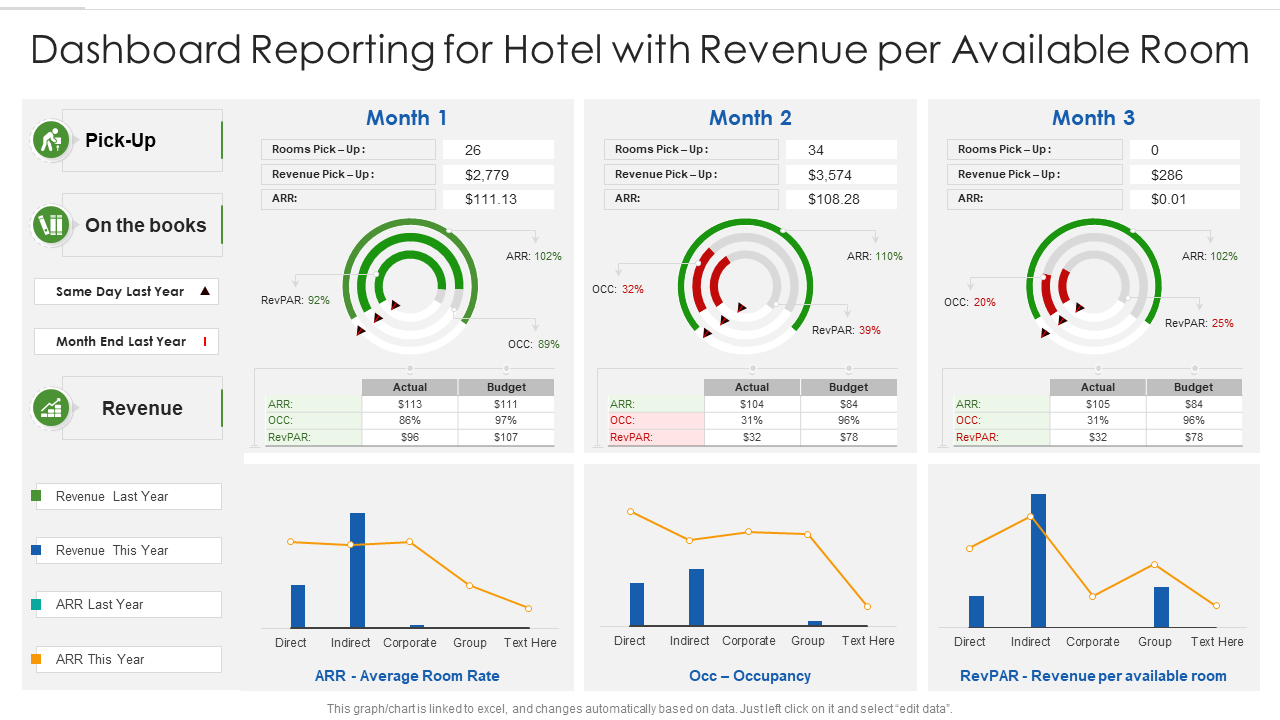
Guest behaviour has genuinely changed, not just anecdotally. Booking windows are shorter, price comparison across platforms is now default behaviour, and demand is increasingly driven by events, airline schedules, and even weather, not just the calendar. Nowhere is this clearer than in how unevenly 2026 demand has landed: luxury ADR grew close to 6% year-to-date through April, while select-service ADR growth sat around 2%, below inflation. Two hotels ten minutes apart, in the same city, can be having completely different years.
This is exactly the uncertainty Hotel Demand Forecasting exists to manage. It's no longer about predicting a single number, it's about continuously narrowing a range as new signals arrive: booking pace, competitor pricing, local events, airline connectivity, and search activity, updated as the picture changes rather than recalculated once a month.
Example. A city hotel preparing for an international exhibition sees average initial bookings. But rising search activity, added flight capacity, and stronger competitor occupancy suggest real demand is building underneath. A property tracking these signals raises rates gradually over the following week instead of scrambling with a last-minute correction once rooms are already gone.
The Growing Role of Hotel Revenue Analytics
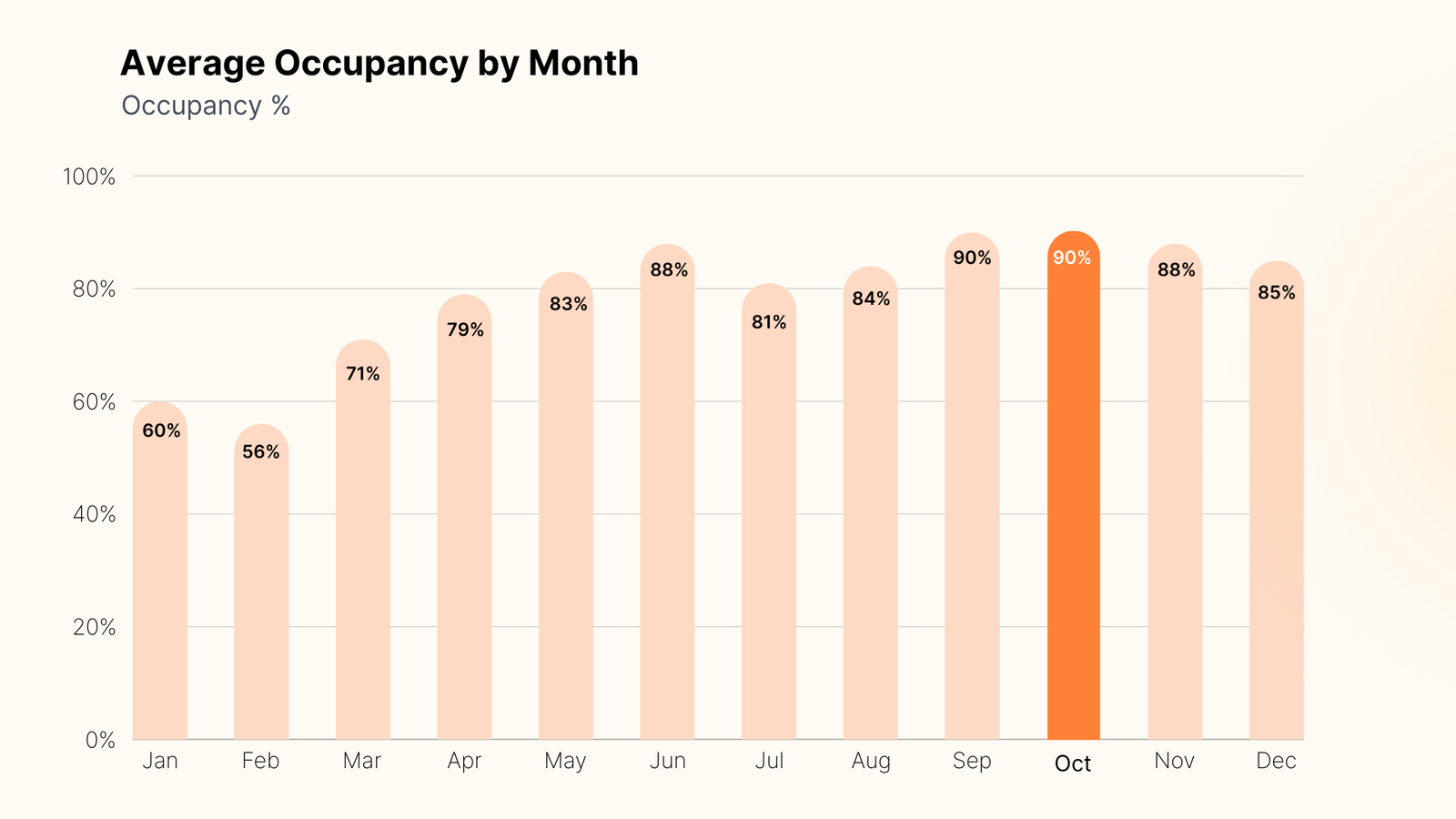
Hotels aren't short on data, they're short on a single place to make sense of it. Reservations, cancellations, and rate shops arrive from booking engines, OTAs, GDS, and direct channels, each generating a fragment of the picture.
Hotel Revenue Analytics is what turns those fragments into a decision. A useful industry example: two channels might produce near-identical booking volume, but once you factor in commission, cancellation rate, and average length of stay, one channel is quietly the more profitable one. Without analytics tying those variables together, both channels look equally good on a reservations report and the more expensive one keeps getting the same inventory allocation it always has.
Good channel-level analytics and good Hotel Demand Forecasting feed each other one explains what already happened, the other uses that pattern to anticipate what's coming next.
Metrics worth tracking together, not in isolation:
- Booking pace and lead time
- ADR and RevPAR, by channel and by segment
- Cancellation rate
- Channel contribution net of commission
- Competitor rate movement
The Role of AI in Modern Revenue Management

The honest 2026 picture on AI adoption has two layers, and most coverage only reports the flattering one. On the surface, adoption looks close to universal; one 2026 owner survey put AI usage at 98%, and a separate Canary Technologies study of 400+ hotel IT decision-makers found 82% expect AI use to expand this year, with 85% committing at least 5% of IT budget to it. But BCG's 2026 analysis with NYU found fewer than 10% of hospitality companies are actually "future-built" with AI generating measurable P&L impact; most hotels have adopted a tool, not a workflow.
AI in Hotel Revenue Management is where the gap between adoption and impact narrows fastest, because the returns are concrete and easy to isolate. Lighthouse's 2025 research put AI usage in revenue management specifically at 63% of hotels, and hotels running AI-assisted pricing report an estimated 17% lift in total revenue versus non-adopters, with AI-driven forecasting improving accuracy roughly 20% over legacy rules-based RMS models, and dynamic pricing engines contributing ADR gains in the 10–15% range. This is the practical case for AI in Hotel Revenue Management not as a replacement for judgment, but as a way to process hundreds of live signals (look-to-book ratios, competitor rate shops, event calendars) that no human team can track manually at hotel scale.
The caveat that matters with AI in Hotel Revenue Management: recommendations still need a revenue manager who knows the local market well enough to know when to override them. A model trained on broad booking patterns won't know that a wedding season shift or a local infrastructure closure changes the picture for your specific property this month.
Revenue Management Is No Longer Only About Pricing
Many owners still equate revenue management with changing room rates. In practice, it now touches sales, marketing, reservations, and distribution together, because a rate decision in isolation can look successful and still lose money.
Example. A hotel fills rooms through heavily discounted OTA bookings and occupancy looks strong. But once commission costs, lower ADR, and shorter average stays are factored in, a smaller number of higher-value direct bookings would have produced more actual profit. This is the core distinction behind Hotel Profitability Strategies: they evaluate demand, pricing, and distribution together against the profit line, not occupancy alone.
Improving Distribution Through Better Insights
Distribution has genuinely gotten more complex direct booking engines, OTAs, metasearch, corporate agreements, wholesalers, and GDS all carry different costs and different guest behaviour. Comparing channels on booking volume alone hides which ones actually build the business.
This is where Data-Driven Hotel Revenue Management earns its keep in distribution decisions specifically a sharper comparison looks at ADR by channel, net revenue after commission, cancellation rate, and repeat-guest contribution, not just reservation counts. Channel-level thinking like this is also where Hotel Profitability Strategies and distribution strategy start to overlap directly. Two channels producing the same number of bookings can differ sharply once commission and retention are priced in, and that difference is where Hotel Revenue Analytics earns its place in the weekly reporting cycle rather than the quarterly one.
Why Hotel Profitability Matters More Than Occupancy
Occupancy used to be the industry's scoreboard. It's an increasingly incomplete one. With 2026 luxury ADR growth outpacing select-service ADR growth by roughly 3x, two fully booked hotels in the same market can post very different profit outcomes depending on who's actually filling the rooms and through which channel.
The more useful question isn't "how do we sell every room" it's which guest segments, channels, and rate strategies produce the strongest return once acquisition cost and commission are subtracted. Answering that consistently is what separates a Hotel Profitability Strategies approach from a pure occupancy chase, and it's a distinction that shows up clearly in this year's bifurcated ADR data.
Forecasting as a Competitive Advantage
The gap between hotels that saw the 2026 demand rebound coming and those that didn't wasn't access to better data; most had access to the same STR reports. It was how frequently they revised their view. Static, monthly forecasts miss inflection points; forecasts updated against live booking pace catch them within days.
Example. A coastal resort seven days out from a long weekend sees booking pace accelerating faster than expected while nearby competitors hold rates flat. A team tracking this daily raises rates gradually over the week. A team checking in monthly discovers the surge only after it's mostly sold through at last month's rate. That gap compounds it's the practical argument for Hotel Demand Forecasting as a continuous process rather than a quarterly exercise.
Turning Insights Into Action
Even properties without a dedicated AI in Hotel Revenue Management platform can close most of this gap manually with disciplined Hotel Demand Forecasting and a weekly review habit. Access to data isn't the bottleneck for most hotels anymore; most already have a PMS, a channel manager, and a booking engine generating reports. The bottleneck is that this information sits in four different dashboards nobody checks together.
Example. A 60-room business hotel sees weekday bookings soften while weekends stay healthy. This is Data-Driven Hotel Revenue Management in its most ordinary, unglamorous form: instead of a blanket discount, the team checks booking pace and channel data together and finds the real driver is a corporate travel dip, not overall demand. They launch targeted weekday offers on select channels and leave weekend pricing untouched protecting the RevPAR that discounting everything would have quietly eroded, which is the everyday version of Hotel Profitability Strategies in practice.
Building Sustainable Hotel Profitability
Revenue growth without margin isn't a strategy, it's a bigger top line with the same or worse bottom line. The questions worth asking regularly: which channels generate the highest net revenue after commission, which guest segments deliver the strongest repeat value, and which promotions grow revenue without quietly eroding profitability. A Data-Driven Hotel Revenue Management approach treats these as ongoing questions to re-check monthly, not a one-time audit.
Looking Ahead
2026 has already shown how fast the picture can shift a RevPAR forecast that moved from 0.6% to 2.8% within five months isn't a rounding error, it's proof that the old cadence of reviewing performance once a quarter is too slow for how demand actually moves now. Hotels investing in Hotel Revenue Analytics, disciplined Hotel Demand Forecasting, practical AI in Hotel Revenue Management, and profit-first Hotel Profitability Strategies are the ones catching these swings while they're still opportunities, not after they've already shown up in a monthly P&L.
Frequently Asked Questions
What is Data-Driven Hotel Revenue Management?
It's the practice of pricing and forecasting off live booking data, competitor rates, and demand signals updated continuously rather than relying on last year's occupancy report and seasonal assumptions alone.
Why did the 2026 RevPAR forecast change so much?
STR and Tourism Economics started 2026 projecting 0.6% RevPAR growth, then upgraded to 2.8% by June after actual year-to-date RevPAR came in at 4.0% a real example of why forecasts built on live pace outperform ones set once a year.
How much revenue lift does AI-assisted revenue management actually deliver?
Industry estimates put it around a 17% total revenue lift versus non-adopters, with forecasting accuracy improving roughly 20% and dynamic pricing contributing ADR gains of 10–15% though results vary by property size and how well the tool is integrated into daily decisions, not just switched on.
Is occupancy still the right metric to chase?
Not on its own. With 2026 luxury ADR growth running roughly 3x select-service ADR growth, two fully booked hotels can post very different profit outcomes which is why profitability strategies weigh channel cost and guest value alongside occupancy.
What KPIs should a hotel track weekly, not monthly?
Booking pace, lead time, cancellation rate, ADR and RevPAR by channel, and competitor rate movement the signals that catch a demand shift while there's still time to act on it.