Hotel Revenue Audit: What Should You Check?

A hotel can be busy and occupancy can look healthy, yet revenue can still fall short of what the property should be earning. That is why a hotel revenue audit should look beyond occupancy and room sales. It should examine pricing, demand, channel mix, rate plans, restrictions, booking pace, distribution costs, and the quality of the data behind every decision.
For hoteliers, the objective is not to create another report that sits in a folder. The objective is to identify where revenue is being lost, where rates are being set too early or too late, and where the commercial strategy is not matching actual demand.
What Is a Hotel Revenue Audit?
A hotel revenue audit is a structured review of the commercial decisions and systems that influence room revenue. It connects performance data with the actions taken by the revenue, sales, distribution, and reservations teams.
Unlike a basic monthly review, an audit asks why a result happened. For example, if ADR is lower than last year, was the decline caused by weak demand, unnecessary discounts, poor segmentation, an incorrect rate ladder, or a channel mix carrying higher acquisition costs?
A strong audit also checks whether the systems are configured correctly. Current hospitality audit guidance commonly includes pricing, forecasting, pickup and pace, market segmentation, competitive positioning, inventory, restrictions, ADR, RevPAR, net revenue, and forecast accuracy. Distribution reviews may also cover channel mix, rate parity, promotions, room mapping, inventory, restrictions, and channel cost.
Why Hotels Need a Revenue Audit
A hotel may increase occupancy by lowering rates, or maintain revenue while high-commission channels take a larger share of bookings. Strong demand can also be missed when discounts remain open or rates are not raised in time.
Hotel revenue management works best when decisions are based on multiple signals rather than a single KPI. Occupancy, ADR, and RevPAR should be read together because each explains a different part of the commercial picture. RevPAR combines occupancy and ADR into a single room-revenue measure, but it does not explain channel costs or ancillary revenue.
1. Check Occupancy, ADR and RevPAR Together
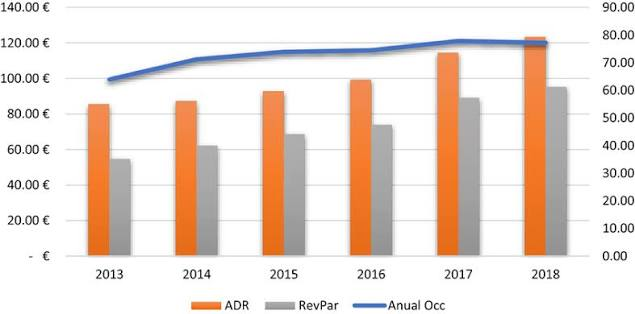
Start with the three numbers most hotels already track:
- Occupancy tells you how much inventory was sold.
- ADR tells you the average room rate achieved.
- RevPAR shows room revenue generated per available room and links occupancy with ADR.
Compare these metrics with budget, the same period last year, forecast, and recent booking pace where reliable data is available.
A useful audit asks:
Why is occupancy above forecast?
Why is ADR below budget?
Is higher occupancy coming from discounting?
Did RevPAR improve because of stronger demand or because of a better pricing mix?
Are some room types performing differently from the property average?
The goal is to understand the relationship between price, demand, and available inventory. That is a core hotel revenue management discipline.
2. Review Your Rate Strategy
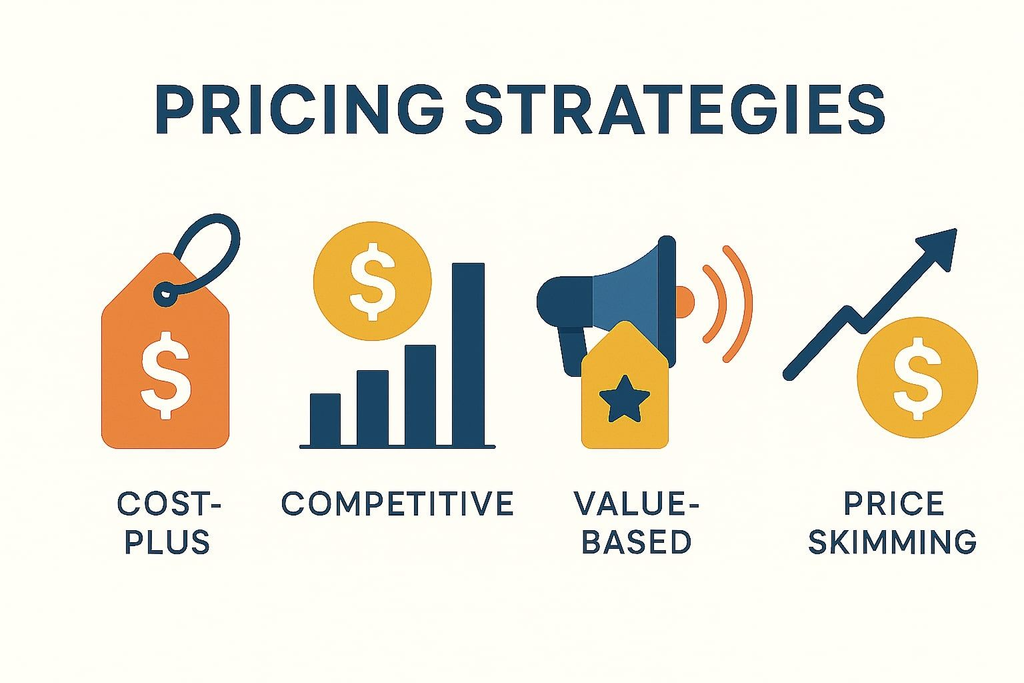
The second step in a revenue audit is to inspect how rates are structured and changed.
Look at your public rates, room-type differentials, meal plans, refundable and non-refundable options, corporate rates, packages, mobile offers, member discounts, and promotional pricing.
Ask whether every discount has a clear commercial reason and whether overlapping offers are weakening price control.
A common issue is having too many overlapping offers. When multiple promotions remain open, the property can lose pricing power even when demand is healthy. Another problem is a rate ladder that does not create enough separation between room categories or demand levels. Add this check to the revenue audit checklist.
Dynamic pricing should respond to changes in demand, booking pace, stay dates, market conditions, and inventory. Current hotel revenue guidance also recommends monitoring pickup, competitor movement, restrictions, and future booking pace rather than relying only on historical averages.
3. Check Booking Pace and Forecast Accuracy
Historical performance tells you what happened; booking pace helps you understand what may happen next.
Review how many reservations are being added for future dates and compare the pace with the forecast and with relevant historical periods. Look for dates where pickup is faster or slower than expected.
This is where hotel revenue analysis should become date-specific, which is central to hotel revenue management.
A single monthly average can hide a major opportunity. That is why hotel revenue analysis needs to move from averages to individual stay dates. For example, a weekend may already have strong pickup 30 days before arrival, while a weekday in the same month may be significantly behind pace. The two dates should not receive the same pricing response.
Measure forecast accuracy over time. When forecasts repeatedly miss demand, determine why. Was an event missed? Did the market shift? Did a group cancel? Was a restriction too aggressive? Did the data feed fail?
An audit should identify the reason for forecast error, not simply record that an error occurred.
4. Audit Your Competitive Set
Competitor analysis is not about copying another hotel's price.
Instead, monitor selected competitors to understand market positioning. Compare room types, cancellation terms, inclusions, promotions, availability, and rate movements for the same dates.
A competitor may be cheaper because of a different room product, inclusions, or promotion. Copying that rate without context can reduce revenue unnecessarily.
Ask whether our market position has a reason, whether rate changes reflect demand, whether competitors are closing inventory while we remain open, and whether discounting is based on demand rather than imitation.
This makes competitor data a signal rather than a pricing rule, and it belongs in the revenue audit checklist. The same principle should guide hotel revenue analysis.
5. Review Channel Mix and Distribution Cost

Revenue quality depends on where bookings come from, not just how many bookings arrive.
Check direct bookings, OTAs, GDS, corporate accounts, travel agents, wholesalers, and other active sources. Measure production by room nights, ADR, cancellation rate, and net contribution after distribution costs.
An OTA booking at a higher gross ADR can still produce less net revenue than a lower-cost booking through another source.
Current commercial audit frameworks specifically include channel mix, channel cost, OTA promotions, rate parity, room and rate mapping, inventory, and net revenue contribution.
OTAs can provide reach and demand a property may not generate on its own. The audit question is whether each channel produces revenue at an acceptable commercial cost.
6. Check Rate Parity and Distribution Accuracy
Rate parity errors can create confusion for guests and reduce confidence in the direct channel.
Search the property as a customer would and compare rates across the direct website, major OTAs, metasearch platforms, and any other important distribution points.
Check the same room type, occupancy, meal inclusion, cancellation condition, and stay dates. Otherwise, a rate comparison may look inconsistent even when the underlying offer is different.
A current 2026 rate-parity checklist recommends defining a rate baseline, mapping all distribution channels, and checking public rates systematically because live prices can change and channel promotions can affect what guests see.
Also review room mapping and inventory synchronization, including failed pushes, restrictions, reservation mismatches, and sync status.
7. Examine Discounts, Restrictions and Rate Fences
Every restriction should have a purpose.
Review minimum length of stay, closed to arrival, closed to departure, stop-sell rules, advance-purchase conditions, and promotional eligibility.
Ask whether restrictions are protecting high-demand dates or blocking useful demand.
A discount can stimulate soft demand, but leaving it open as demand strengthens can reduce the rate achieved.
Use clear rate fences so that discounted offers target the intended segment rather than becoming the default rate for everyone. Good hotel revenue management keeps those fences tied to demand.
8. Audit Room-Type and Inventory Strategy

Many hotels focus on overall inventory and overlook room-type performance.
Review demand and revenue by room category. Check whether premium rooms are being sold early at low rates. Look for upgrade opportunities, room-type availability gaps, and dates where certain categories sell much faster than others.
A good inventory strategy should support both occupancy and rate. If standard rooms sell out while premium rooms remain, review pricing, positioning, mapping, and restrictions.
This is another area where room-level review can reveal issues hidden by property-level averages.
9. Review Revenue Data Quality
Bad data creates bad decisions.
Check whether PMS, RMS, channel manager, booking engine, and reporting systems are using consistent room types, rate plans, source codes, market segments, and dates.
Review overrides, missing or duplicate reservations, incorrect mapping, stale restrictions, and failed integrations.
Hotel technology audit guidance also highlights PMS, RMS, CRM, BI, and other system connections because poor synchronization can affect pricing, inventory, reporting, and decision quality.
The audit should confirm that the numbers being used for strategy can actually be trusted. Make data validation a standing item in the revenue audit checklist.
10. Measure Profitability, Not Just Revenue
Revenue is only part of the picture. Review hotel revenue performance alongside the cost of acquiring it.
Look at net ADR, distribution cost, ancillary contribution, and profitability where the required data is available. TRevPAR can add context by including non-room revenue, while GOPPAR brings operating profitability into the discussion.
This prevents celebrating higher room revenue when the additional business costs too much to acquire or operate.
Your hotel revenue performance should therefore be read through both gross results and net contribution.
The Revenue Audit Checklist You Can Use
Use the following as a practical review:
- Occupancy versus budget, forecast and comparable periods
- ADR by room type and segment
- RevPAR trend and movement
- Booking pace and pickup
- Forecast accuracy
- Rate ladder and rate-plan structure
- Active discounts and promotions
- Restrictions and rate fences
- Competitive positioning
- Rate parity across important channels
- Channel mix and net contribution
- Room and rate mapping
- PMS, RMS and channel-manager synchronization
- Market-segment and source-code accuracy
- Net ADR, TRevPAR or GOPPAR where relevant
Use the revenue audit checklist as a starting point, then add checks that reflect your hotel's market, room count, demand patterns, and distribution model.
How Often Should a Hotel Conduct an Audit?
Daily reviews can focus on pickup, major rate changes, availability, restrictions, parity exceptions, and system errors.
Weekly reviews can examine booking pace, competitor movement, channel production, and upcoming high-demand dates.
Monthly reviews can go deeper into ADR, RevPAR, segmentation, net channel contribution, forecast performance, and rate-plan effectiveness.
Quarterly reviews can step back and examine whether the overall commercial strategy is still aligned with market conditions.
What Should the Final Audit Report Show?
A useful audit report should not simply contain charts. A hotel revenue management review is useful when findings lead to decisions.
It should clearly show:
- What is working?
- Where is revenue leaking?
- Which dates require action?
- Which rate plans should be changed?
- Which channels are producing profitable demand?
- Which system or data issues need correction?
- What should be done first?
Prioritization matters because not every issue has the same financial impact.
A strong hotel revenue analysis should turn findings into actions that a revenue manager, general manager, or owner can understand quickly. Use the same hotel revenue analysis format each month so changes are easier to spot. That makes the report useful beyond the revenue meeting.
Final Takeaway
A hotel does not improve revenue simply by changing room rates more often.
It improves revenue by understanding demand, pricing inventory, controlling distribution, protecting high-value dates, measuring net contribution, and maintaining reliable data.
A recurring hotel revenue audit gives the commercial team a structured way to test whether those pieces are working together. It also gives management a consistent view of hotel revenue performance over time.
The goal is not one magical number or universal pricing rule. It is understanding hotel revenue performance across dates, segments, room types, and channels, then finding the gap between market demand and captured revenue.
For hotels building a disciplined commercial strategy, that gap is often where the next revenue opportunity begins. Tracking hotel revenue performance makes that gap easier to see and act on.