10 Hotel Revenue Leaks That Are Quietly Costing You Money

Your hotel could be selling rooms every night and still be leaving money on the table.
That is the uncomfortable part of hotel revenue management.
Most revenue loss does not arrive as one huge mistake. It happens through small pricing errors, missed demand signals, unnecessary discounts, weak channel strategy, poor forecasting, and decisions that look harmless when viewed one day at a time.
A room sold for ₹500 less than it should have been does not feel like a disaster.
Multiply that across 20 rooms.
Then across 30 days.
Then across an entire year.
Suddenly, the “small” leak is a serious revenue problem.
In today's hotel market, pricing needs to respond to demand, booking pace, competitors, seasonality, events, and distribution costs. Industry coverage in 2026 continues to highlight static pricing, early discounting, weak competitor monitoring, and poor channel decisions as common sources of lost hotel revenue.
Here are 10 hotel revenue leaks that could be quietly costing your property money — and what you can do about them.
1. Keeping the Same Room Rate When Demand Changes
One of the easiest ways to lose hotel revenue is to treat your room rate like a fixed number.
Your hotel may charge ₹4,000 on a Monday. But should it still charge ₹4,000 when only 10 rooms remain for a major Saturday? Probably not.
Demand is not constant. It changes because of weekends, holidays, events, conferences, weddings, school vacations, weather, local attractions, competitor pricing and booking behaviour. A static pricing strategy ignores these changes.
When demand increases, the hotel may sell too cheaply. When demand drops, the same hotel may remain overpriced and struggle to generate bookings.
That is why dynamic pricing is so important. Dynamic pricing does not mean changing prices randomly. It means adjusting rates based on what the market and your booking data are telling you.
The leak: You sell high-demand dates too cheaply.
The fix: Review rates according to demand, booking pace, occupancy and market conditions.
2. Discounting Too Early
Your bookings are slow. The natural reaction is: “Reduce the price.” But that reaction can cost you money.
A slow pickup today does not automatically mean demand will remain weak until arrival. Hotels often receive a significant portion of their bookings closer to the stay date. If you reduce your rate too early, you may simply give a discount to guests who would have booked anyway.
That means you lose ADR without creating genuinely additional demand.
For example, imagine your standard rate is ₹5,000. You reduce it to ₹4,000 because pickup looks slow. Later, demand increases and those rooms would have sold at ₹5,000. You filled the room. But you left ₹1,000 behind.
The leak: Discounting before understanding booking pace and future demand.
The fix: Use pickup, pace, historical patterns and current market conditions before reducing rates.
3. Ignoring What Your Competitors Are Charging
Hotel guests compare. Before booking, they can look at several properties within minutes. So why would your pricing strategy ignore those properties?
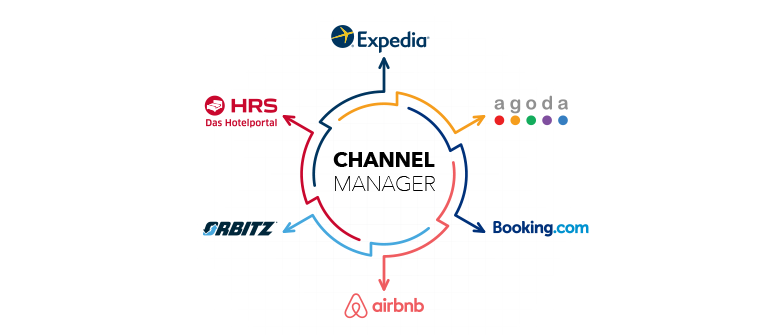
If similar hotels are charging ₹6,000 and you are charging ₹4,500 on a high-demand date, you may be underpricing your rooms. On the other hand, if competitors are charging ₹4,000 while you are asking ₹6,000 on a weak-demand date, you may be pricing yourself out of the market.
Competitor rate analysis gives you context. But there is an important distinction: Competitor analysis does not mean simply copying the cheapest hotel.
Your room type, location, facilities, reviews, brand position, inclusions and guest segment all matter. Recent hospitality coverage continues to identify poor comp-set selection and inconsistent rate comparison as sources of revenue leakage.
The leak: Making pricing decisions without knowing where your hotel sits in the market.
The fix: Monitor relevant competitors and compare like-for-like room types and conditions.
4. Chasing Occupancy Instead of Revenue
A hotel reaches 95% occupancy. Everyone celebrates. But there is another question you should ask: “At what rate did we sell those rooms?”
Occupancy is important. It is not the whole story. A hotel can achieve excellent occupancy while producing disappointing revenue if room rates are too low.
For example:
Hotel A: 95% occupancy × ₹3,000 ADR
Hotel B: 85% occupancy × ₹4,500 ADR
Which strategy is better? The answer cannot be determined by occupancy alone. This is why hotel revenue managers look at metrics such as ADR and RevPAR, alongside occupancy and other commercial indicators.
RevPAR connects occupancy and ADR to show how effectively available room inventory is producing room revenue.
The leak: Treating a high occupancy percentage as proof that pricing is working.
The fix: Look at occupancy, ADR, RevPAR, pickup, channel mix and profitability together.
5. Selling Your Cheapest Rooms on Your Best Dates

Not every room should be treated equally. Not every date should be treated equally either.
Imagine demand is extremely strong for a particular weekend. Your hotel has only a few rooms left. Yet your cheapest rate plan is still available. A guest books it.
You successfully generated a reservation — but you may have sold valuable inventory at a rate that was too low.
This is where inventory controls become important. Hotels can use restrictions, minimum length-of-stay rules, room-type controls, closed-to-arrival restrictions and rate fences when appropriate.
The objective is not to make booking harder. It is to protect valuable inventory when demand is strong.
The leak: Allowing low-value rates to remain available when higher-value demand is likely.
The fix: Control rate and inventory availability according to demand.
6. Depending Too Heavily on One Booking Channel
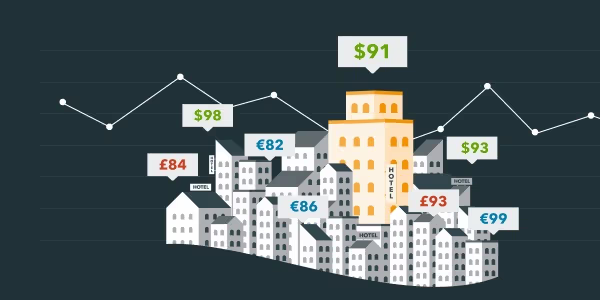
OTAs are an important part of hotel distribution. But relying too heavily on a single channel can create risk.
Every booking channel has a cost. An OTA reservation may generate the booking you need, but commission and other distribution costs affect how much revenue the hotel actually keeps.
A direct booking may have a different acquisition cost. A corporate booking may have different commercial terms. A group booking may affect inventory differently.
The important question is therefore not: “Which channel gives me the most bookings?” It is: “Which channels give me the best business for each date and guest segment?”
A hotel should understand its channel mix rather than judging performance by booking volume alone.
The leak: Optimizing for bookings without considering channel economics.
The fix: Measure channel contribution using revenue, acquisition cost, profitability, demand and guest value.
7. Rate Parity Problems You Are Not Seeing
Your hotel may have one room rate on the website. But what happens when a guest sees a different price somewhere else?
Rate parity problems can occur through wholesalers, B2B distribution, promotions, currency issues, package rates, or third-party redistribution.
A lower rate elsewhere can shift bookings away from your direct channel and can make it harder to maintain a clear pricing strategy. Recent 2026 hospitality coverage specifically identifies rate-parity breaches and wholesaler redistribution as potential revenue leakage for Indian hotels.
The important point is that checking your hotel's own website is not enough. You need to understand how your rates appear across the distribution ecosystem.
The leak: Losing direct-booking opportunities or pricing control because your rates are inconsistent across channels.
The fix: Monitor rate parity regularly and investigate unexplained differences.
8. Forecasting Demand Using Gut Feeling
“Bookings look okay.” “Next month should be busy.” “Last year was slow.”
These statements sound useful. They are not a forecast.
A proper hotel demand forecast should consider historical performance, booking pace, pickup, seasonality, events, market conditions, competitor behaviour, cancellations, lead time and other relevant demand signals.
Without forecasting, your pricing decisions become reactive. You change rates only after the market has already changed. That is when opportunities are easiest to miss.
Forecasting does not mean predicting the future perfectly. It means making better decisions with the information available.
The leak: Waiting for demand to become obvious before acting on it.
The fix: Build forecasts around measurable demand signals and review them regularly.
9. Ignoring Slow Booking Dates Until It Is Too Late
There is another side to revenue leakage. Hotels often react quickly when a date is selling out but slowly when a date is underperforming. That can be expensive.
Suppose your hotel has 50 rooms available next Thursday. One week before arrival, only 10 rooms are booked. That is a warning.
You now have an opportunity to investigate:
Is demand genuinely weak? Are competitors cheaper? Is the date affected by a local event? Is your hotel visible on the right channels? Is your offer competitive? Are there restrictions blocking bookings?
The earlier you identify a problem, the more options you have. Waiting until the day before arrival leaves you with fewer levers — often resulting in last-minute discounts.
The leak: Discovering weak demand only after the opportunity to stimulate it has narrowed.
The fix: Monitor pickup and pace well before the arrival date.
10. Not Having a Hotel Revenue Strategy for Every Type of Demand
Business travellers. Weekend leisure guests. Families. Groups. Corporate accounts. Long-stay guests. Walk-ins. OTA customers. Direct bookers.
These guests do not necessarily have the same willingness to pay. Yet some hotels use almost identical pricing and offers for everyone. That leaves potential revenue untapped.
A corporate guest travelling midweek may value flexibility. A leisure traveller may respond to a package. A family may value breakfast or activities. A price-sensitive guest may respond to a carefully controlled offer.
Revenue management is not simply about increasing or decreasing one number. It is about understanding who is booking, why they are booking, when they are booking, and what they are willing to pay.
The leak: Using one pricing approach for every guest and every demand situation.
The fix: Segment your demand and build pricing and offers around different guest behaviours.
How Much Could These Hotel Revenue Leaks Be Costing You?
The difficult part is that there is no universal number. It depends on your room inventory, ADR, occupancy, demand patterns, market, distribution mix and pricing strategy.
But the principle is simple:
A small revenue leak repeated across hundreds or thousands of room nights becomes a major annual loss.
Consider a hotel that has 50 rooms. If just 10 rooms per day are sold ₹500 below a better achievable rate:
- 10 rooms × ₹500 = ₹5,000 per day
- Over 30 days: ₹1,50,000
- Over 12 months: ₹18,00,000
That is only an illustration. The actual opportunity for your property could be smaller or much larger.
And pricing is only one source of leakage. Add distribution costs, rate-parity issues, poor inventory controls, weak forecasting, unnecessary discounting and missed upselling opportunities, and the total opportunity can become significant.
The Bigger Problem: Revenue Leakage Is Often Invisible
The most dangerous revenue leaks do not appear as obvious losses on a balance sheet. You do not see a line saying: “₹18 lakh lost because we priced too low on high-demand dates.”
Instead, you see: Good occupancy. Normal bookings. Regular OTA reservations. A familiar ADR. A monthly revenue report.
Everything looks fine. Until you compare what actually happened with what could have happened. That is why hotel revenue management needs to look beyond occupancy.
The right questions are:
Did we sell at the right price? Did we react to demand quickly enough? Were we competitive? Did we protect high-value inventory? Was our channel mix profitable? Did we forecast demand correctly? Did we leave money on the table?
A Simple Hotel Revenue Leakage Checklist
Before your next revenue meeting, check these areas:
- Pricing: Are rates changing according to demand?
- Pickup: Are you monitoring booking pace?
- Competitors: Do you know how comparable hotels are pricing?
- Occupancy: Are you looking beyond occupancy to ADR and RevPAR?
- Distribution: Do you understand the cost of each booking channel?
- Rate parity: Are your rates consistent across relevant channels?
- Forecasting: Are your pricing decisions based on data?
- Inventory: Are your best room types and dates being protected?
- Segmentation: Are you pricing different demand segments appropriately?
- Direct bookings: Are you doing enough to capture lower-cost direct demand?
If several answers are “no,” there could be significant revenue sitting on the table.
Stop Managing Revenue After the Problem Appears
The strongest revenue strategy is proactive.
Don't wait until occupancy drops to change your pricing. Don't wait until a competitor sells out to increase your rates. Don't wait until arrival day to realize that a date is underperforming. Don't wait until the end of the month to discover that ADR fell.
Revenue management works best when hotels monitor demand, identify opportunities early and act before the revenue is lost. That is the difference between reacting to bookings and managing revenue.
Find the Revenue Your Hotel May Be Missing
At revmerito, revenue management goes beyond simply changing room rates. The focus is on understanding your hotel's demand, pricing, competition, distribution and performance so that you can make better revenue decisions.
From dynamic pricing and revenue forecasting to competitor analysis, RevPAR improvement and revenue audits, the objective is simple: Find where your hotel is leaving money on the table — and build a strategy to capture more of it.
Your hotel does not always need more rooms. It may need to make more from the rooms it already has.
Find your revenue leaks with revmerito.