Why Most Hotel Owners Pick The Wrong Revenue Management Partner
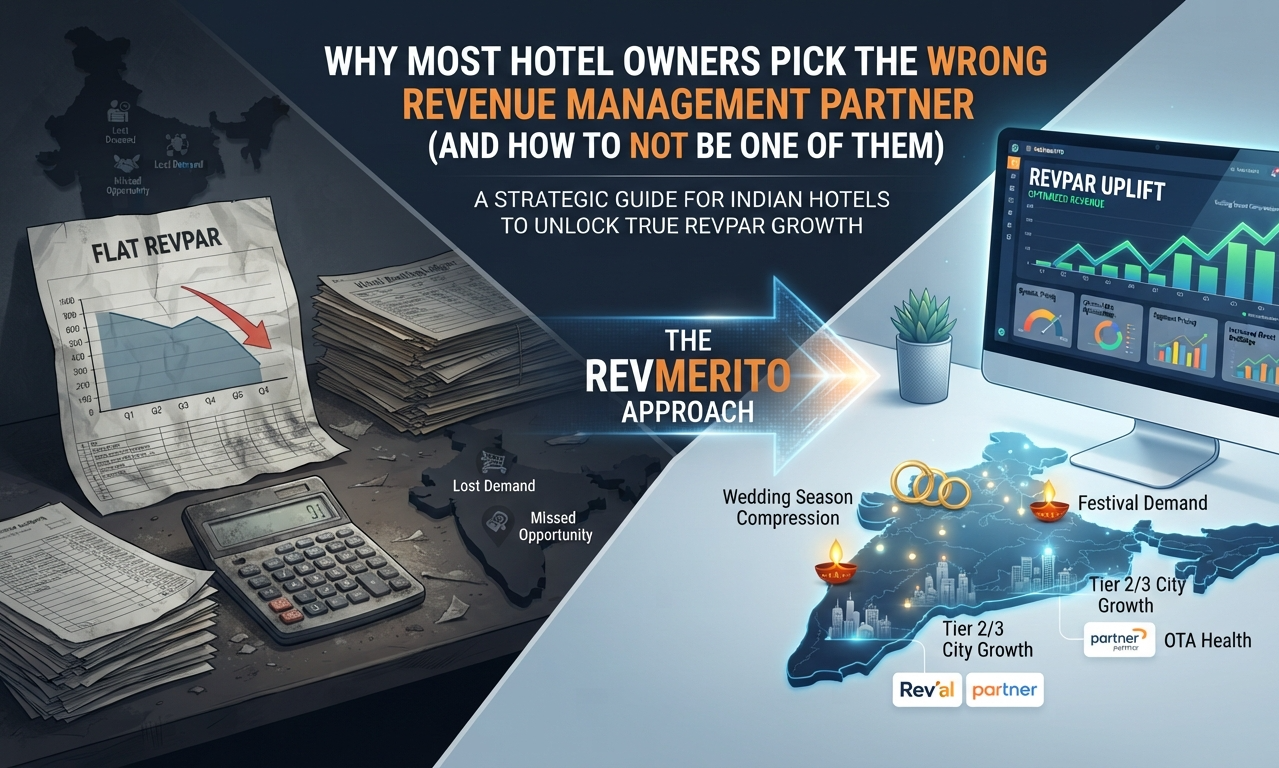
If you run a hotel in India and your RevPAR graph has looked flat for two straight quarters, the uncomfortable truth is that a hotel revenue management company in india isn't a luxury add-on anymore, it's the difference between a property that survives the next OTA rate war and one that gets quietly squeezed out of it. Every week you delay is a week your competitor down the road is selling your best rooms at your ideal price, and you're not.
There are dozens of hotel revenue management companies in india promising the same 20-30% RevPAR uplift on a slide, but very few of them can actually show you the math behind that number, and almost none of them will show you what happens in the months the number doesn't hit.
That's the gap revmerito was built to close. Not another dashboard vendor. Not another agency that disappears after the onboarding call. A team that treats your P&L like it's our own.
The Real Cost of Getting This Decision Wrong
Most owners don't lose money because they picked a bad partner. They lose money because they never picked one at all, or they picked based on a slick pitch deck instead of an actual track record. Here's what that looks like on the ground:
- Rooms sold below market rate during high-demand weekends because nobody was watching compression events in real time
- OTA commission creep eating 18-22% of revenue that should have gone straight to the bottom line
- Rate parity violations that trigger algorithmic penalties on Booking.com and MakeMyTrip, quietly tanking your visibility for weeks
- A GM manually adjusting rates in a spreadsheet at 11pm because there's no system doing it for them
- Group and corporate rates locked in months in advance with no escalation clause, even as leisure demand later spikes past them
- No clear owner of the pricing decision at all — GM, front office, and owner all nudging rates in different directions on different days
None of this is dramatic. It's slow, it's invisible month to month, and by the time an owner notices, they've usually left six or seven figures on the table over a year. This is exactly why the smartest operators stop treating revenue management as an internal side-task and start treating it as a specialized function that needs its own experts.
Put rough numbers on it and it gets uncomfortable fast. A 60-room hotel running at ₹4,500 ADR with even a 6% blended pricing inefficiency across the year is quietly giving up somewhere north of ₹40-50 lakhs in annual revenue — not from empty rooms, but from rooms sold at the wrong price to the wrong segment on the wrong day. Scale that across a 150-room property and the number gets a lot harder to ignore. This is the calculation most owners never actually run, because nobody hands them the spreadsheet that shows it. We do, on the first call, before you've committed to anything.
What the Best Revenue Management Partners Actually Do (That Most Don't)
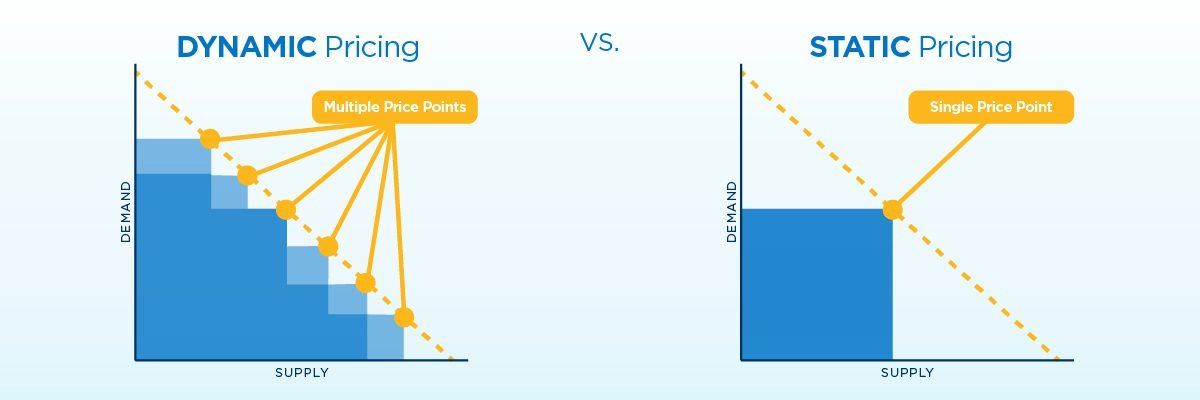
Search engines and sales decks throw the term "revenue management" around loosely, so it's worth being precise. A serious partner isn't just adjusting prices. They're running a continuous loop across four things:
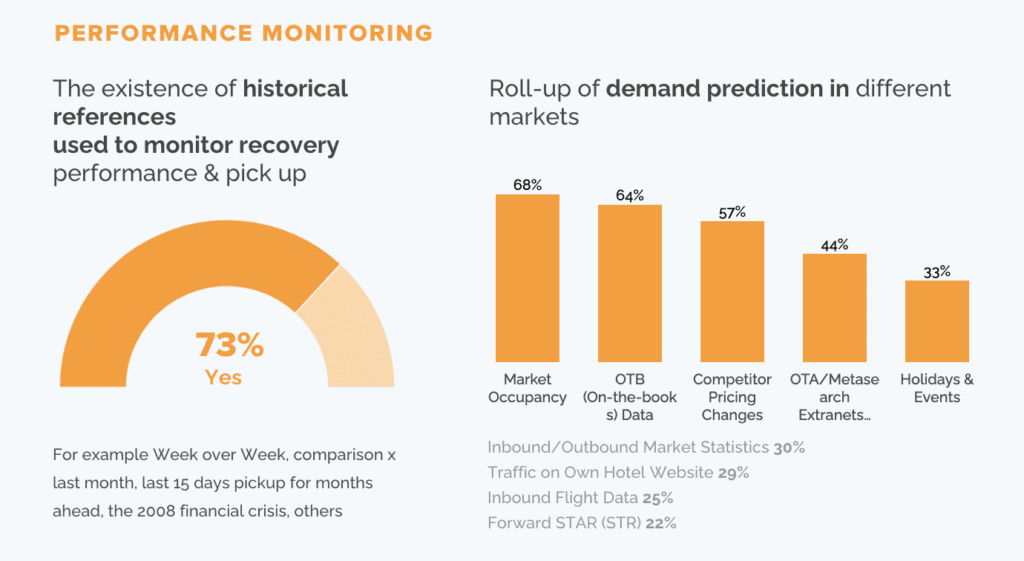
- Demand forecasting, not guesswork. Real forecasting pulls booking pace, historical pickup, local events, flight and rail data, and competitor rate shifts into one model, then updates pricing daily — sometimes hourly during compression periods.
- Channel mix optimization. This is where OTAs come in, and here's where a lot of agencies get the framing wrong. OTAs aren't the enemy. They're a massive, high-intent acquisition channel that most independent hotels could never reach on their own marketing budget. The job isn't to "beat" OTAs, it's to use them intelligently — driving volume through the channels that convert best for your specific property, while steadily building your own direct booking engine so you're not 100% dependent on any single platform's algorithm.
- Rate parity and distribution hygiene. One mismatched rate across your PMS, channel manager, and OTA extranets can trigger visibility penalties that take weeks to recover from. This needs daily auditing, not a monthly check-in.
- Segment-level pricing, not blanket discounts. Corporate, leisure, OTA, direct, and MICE segments all behave differently. Treating them with one flat rate strategy is the single most common mistake independent hotels make.
When you're comparing potential pricing partners, ask each one to walk you through exactly how they handle these four things for a property your size. The vague ones will talk about "AI" and "data-driven strategies" without ever naming a metric. The good ones will pull up an actual case study within the first five minutes.
Why India Is a Genuinely Different Market to Get Right
This is the part most global-template agencies quietly skip. Most hotel revenue management companies in india were originally built around metro hub markets — Mumbai, Delhi NCR, Bengaluru — and that's exactly why so many of them stumble the moment a client owns a resort in Coorg, a heritage haveli in Udaipur, or a business hotel in a Tier 2 city like Indore or Nagpur.
Indian hospitality demand doesn't move in a straight line. You've got:
- Wedding season compression that can 3-4x demand in specific districts for weeks at a time
- Domestic leisure travel patterns that shift hard around festivals, school holidays, and long weekends
- A heavy reliance on GCC and NRI travel corridors for certain regions
- Massive rate sensitivity in the OTA channel compared to Western markets, where MakeMyTrip and Goibibo behave very differently from Booking.com or Expedia
- Corporate and MICE demand that's still recovering unevenly city by city
A generic pricing algorithm trained mostly on international hotel data will misread almost all of this. It'll under-price during a local temple festival because it doesn't know the festival exists, and it'll over-discount during a slow week that's actually about to compress because a wedding block just got confirmed. This is precisely why revmerito builds market-specific demand calendars for every property we work with, city by city, festival by festival, rather than dropping a one-size-fits-all model onto an Indian hotel and hoping it holds.
It also means the reporting has to speak the owner's language, not a data scientist's. A GM in Jodhpur doesn't need a confidence interval, they need to know that Gangaur festival week is coming, that last year it drove a 60% rate premium, and that the rooms need to be blocked and repriced starting three weeks out — not two days out, once the OTA calendar has already filled in around them.
What Owners Actually Compare When They Shortlist a Partner
When owners actually shortlist hotel revenue management companies in india, they're rarely comparing dashboard screenshots. They're comparing who picks up the phone on a Tuesday night when OTA parity breaks, who actually understands their specific city's demand rhythm, and who's willing to be measured on RevPAR growth instead of hiding behind vanity metrics like "impressions" or "profile views."
Here's a shortlist of questions worth asking any prospective partner before you sign anything:
- Can you show me a before-and-after RevPAR chart from a property similar in size and location to mine?
- How often do you actually adjust rates — daily, weekly, or only when someone remembers to?
- What's your OTA commission optimization approach, and how do you grow direct bookings without cutting off OTA volume entirely?
- Who is my actual point of contact, and what's the response time when something breaks on a weekend?
- What happens in month four, five, six — do I get a report, or do I get a strategy shift based on what the data is showing?
Compare that against the handful of hotel revenue management companies in india that actually publish real, verifiable before-and-after numbers instead of recycled stock testimonials, and the list gets short very fast. revmerito answers all five of those questions in the first strategy call, because we'd rather lose a prospect who wasn't serious than win one we can't deliver for. If a partner hesitates on any one of those five, that hesitation is data. Write it down and ask again in a week — a real strategist won't need the extra time to come up with a straight answer, because they're not building the answer, they're just recalling it.
How revmerito Approaches It Differently
revmerito was built specifically to be a hotel revenue management company in india that speaks the language of independent owners and Tier 2/Tier 3 properties, not just five-star chains in Mumbai and Delhi. That means:
- Hands-on rate strategy, not autopilot software. You get a dedicated revenue strategist who knows your property's specific demand patterns, not a black-box algorithm you can't question. When something looks off in your booking pace, you can call a human and get an answer that day.
- Transparent, weekly reporting. No quarterly PDF that shows up three months too late to act on. You see RevPAR, ADR, occupancy, and channel mix movement every single week, with plain-language commentary on why the numbers moved and what we're doing about it.
- OTA-as-partner strategy, not OTA-avoidance theater. Some agencies pitch "escape the OTAs" as a selling point. That's a fantasy for most Indian independent hotels — OTAs are how a huge share of your guests find you in the first place. Our approach is to optimize your OTA presence for maximum visibility and margin while simultaneously building your direct channel with a proper booking engine, retargeting, and loyalty incentives, so both channels grow together instead of one being sacrificed for the other.
- Pricing built for how your market actually behaves. Festival calendars, wedding season blocks, regional holiday patterns, and city-specific competitor sets — all mapped before we ever touch your rates.
- Full-stack execution, not just strategy slides. Between revmerito's revenue management work and webmerito's website and booking-engine builds, you're not stitching together three different vendors who don't talk to each other. Your pricing strategy, your website conversion path, and your direct booking funnel are built by one team that's actually accountable for the whole guest journey, not just the piece they were hired for.
What the First 90 Days Actually Look Like
Most pitches stop at the promise. Here's the part that usually gets left out — what actually happens after you sign.
- Weeks 1-2: Audit and baseline. We pull twelve months of PMS and OTA data, map your current channel mix, flag every parity gap, and build your property's demand calendar — festivals, weddings, corporate cycles, school holidays, all of it.
- Weeks 3-4: Segment strategy and quick wins. Rate structures get rebuilt around how your segments actually behave, not a flat blanket rate. This is usually where the first visible ADR movement shows up, often within the first billing cycle.
- Month 2: Distribution cleanup. Every OTA extranet, your channel manager, and your direct booking engine get synced and audited weekly. Commission leakage gets identified and closed wherever it's closeable.
- Month 3 onward: Compounding. Forecasting sharpens as we accumulate your property's actual booking pace data. Direct bookings start climbing as retargeting and loyalty incentives kick in alongside the OTA optimization, not instead of it.
You get a weekly number, not a quarterly surprise. And if something isn't working by week six, you'll hear that from us before you have to ask.
The Real Question to Ask Before You Sign With Anyone
Search "hotel revenue management companies in india" today and you'll find a dozen near-identical homepages, all promising the same double-digit RevPAR lift with the same three bullet points. The question that actually separates a good hire from a bad one isn't "do they know revenue management" — most of them technically do. It's "will they treat my hotel like it's the only client that matters, or like it's account number 47 on a spreadsheet."
If you're evaluating a hotel revenue management company in india for a 30-80 room independent property, ask yourself honestly whether the last vendor you talked to could name your competitive set without you telling them first. If they couldn't, that's your answer.
The Bottom Line
You don't need another generic pitch deck promising a percentage increase nobody can walk you through. You need a hotel revenue management company in india that's actually sat across the table from an owner staring down a 42% occupancy report on a Monday morning and knows exactly what to do about it by Friday. That's the standard revmerito holds itself to on every property we take on, whether it's a 25-room boutique stay or a 200-room business hotel.
If your pricing strategy is still living in a spreadsheet, or your last "revenue management" hire was really just a rate-copying exercise, book a strategy call with revmerito this week. Bring your last three months of OTA and PMS data. We'll tell you, honestly, within the first conversation whether we think we can move your numbers — and exactly what that would take.
Frequently Asked Questions
How much does hiring a hotel revenue management company in india typically cost?
Most operate on a percentage-of-revenue or flat monthly retainer model, usually somewhere between 3-8% of managed room revenue depending on property size and scope. The ROI question matters more than the sticker price — a partner driving a genuine 15-20% RevPAR increase pays for itself many times over.
Is this only worth it for large hotel chains?
No — if anything, independent and boutique properties see the biggest relative gains, because most of them have never had dedicated revenue strategy applied to their pricing at all. A 40-room heritage property with no revenue management is usually leaving more on the table, proportionally, than a 300-room branded hotel that already has some systems in place.
How is revmerito different from software-only tools like RMS platforms?
Software gives you numbers. It doesn't call you when a competitor drops rates 20% overnight, doesn't know your wedding season block is about to compress demand, and doesn't adjust strategy based on a conversation with your front office manager. revmerito combines the tooling with an actual strategist who owns the outcome.
How quickly can I expect to see results?
Most properties see measurable movement in ADR and channel mix within the first 30-45 days, with the fuller RevPAR impact compounding over the following two to three months as demand calendars, segment pricing, and OTA optimization all kick in together.
Will I lose control over my own pricing decisions?
No — the strategy is built with you, not around you. You'll always have final sign-off on rate floors, ceilings, and any promotional pricing. What changes is that the day-to-day adjustments happen on a schedule and a data set, instead of whenever someone remembers to log in.
What if my hotel is already using a channel manager or PMS with built-in pricing tools?
That's a starting point, not a finish line. Most built-in tools handle basic rate distribution but stop short of demand forecasting, segment strategy, and competitor tracking. We work alongside your existing PMS and channel manager rather than replacing them, layering the strategy and daily execution on top of the systems you already have.