Local SEO for Hotels: Rank Higher on Google Maps
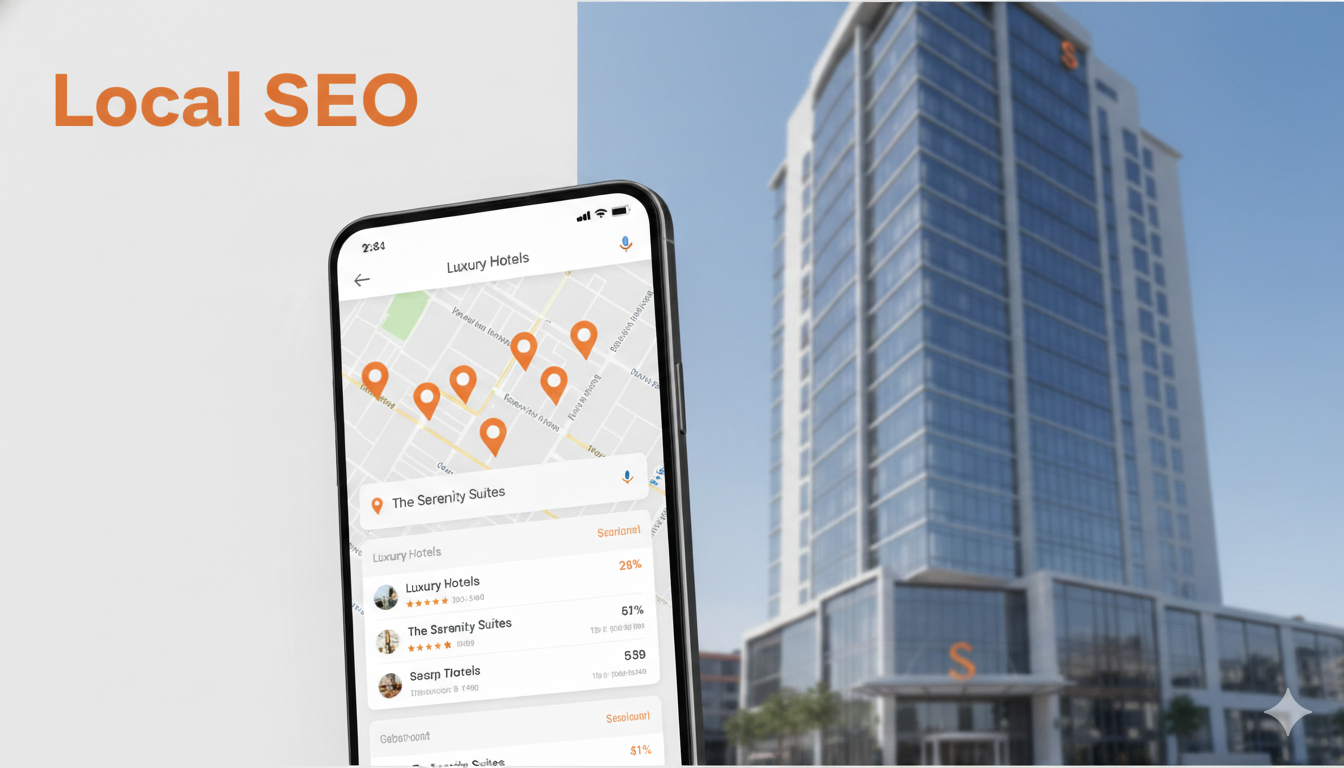
When travelers search for accommodations on their phones, most start with Google Maps. They compare ratings, prices, and distance within seconds. If your hotel isn't visible in those top results, you lose the guest before they even see your website.
But here's the part most local SEO guides skip: ranking well on Google Maps doesn't automatically mean the guest books with you. Google now shows a rate-comparison module right inside the same Maps and Search result Booking.com, Expedia, and your own site, side by side. You can rank #1 on the map and still lose the click to an OTA sitting one row below your listing, inside your own search result. Getting found and winning the direct hotel bookings that follow are two different problems, and most hotel digital marketing advice and most metasearch for hoteliers content, for that matter only solves the first one.
Why Local SEO Matters And Where It Stops
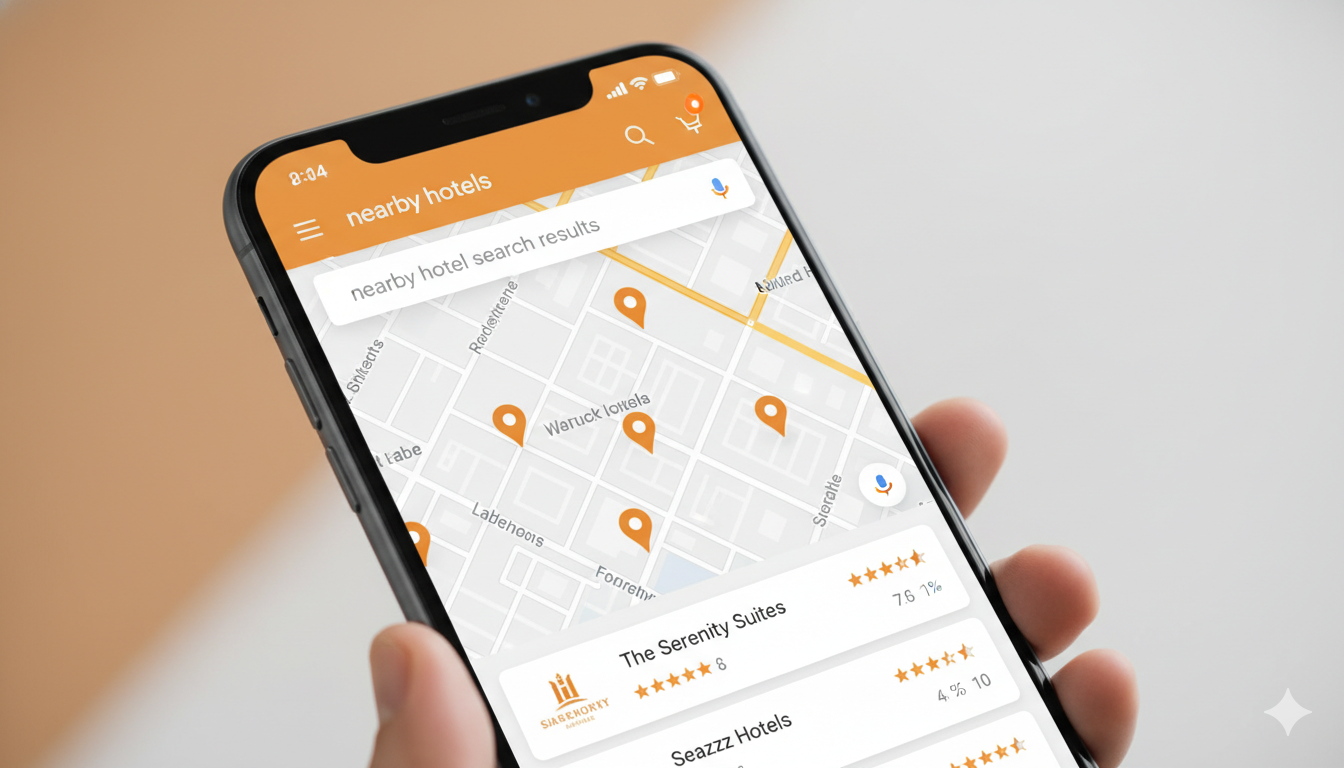
Hotels attract guests by location in a way most businesses don't. Someone planning a trip searches "hotels near [destination]," and your visibility in that moment decides whether they call you or a competitor three listings down.
Local search results appear before organic results, so the map pack gets prime screen real estate. Google evaluates local businesses on proximity, relevance, and prominence citations, reviews, and profile completeness. A weak or inconsistent Google Business Profile caps your ranking regardless of how good the actual hotel is, and a capped ranking means fewer of the searchers who would otherwise turn into direct hotel bookings ever see your listing at all.
That's the visibility half of the equation. The conversion half happens in the same breath: once a traveler sees your listing, a rate-comparison module often sits right there showing what OTAs are charging for the same room. This is exactly the terrain Google Hotel Ads and metasearch cover, and it's why local SEO and metasearch strategy have to be planned together, not as separate projects.
Setting Up Your Google Business Profile Correctly
Your Google Business Profile is the foundation everything else sits on.
Start with an accurate hotel name, address, and phone number identical across every platform. Inconsistent NAP data confuses Google's algorithm and drags down your ranking confidence.
Fill out every field. Upload at least 10 high-quality photos covering the exterior, rooms, lobby, amenities, and dining areas. Complete profiles rank better, and photos directly influence a traveler's decision before they've read a word of your description.
Building Citation Consistency and Authority
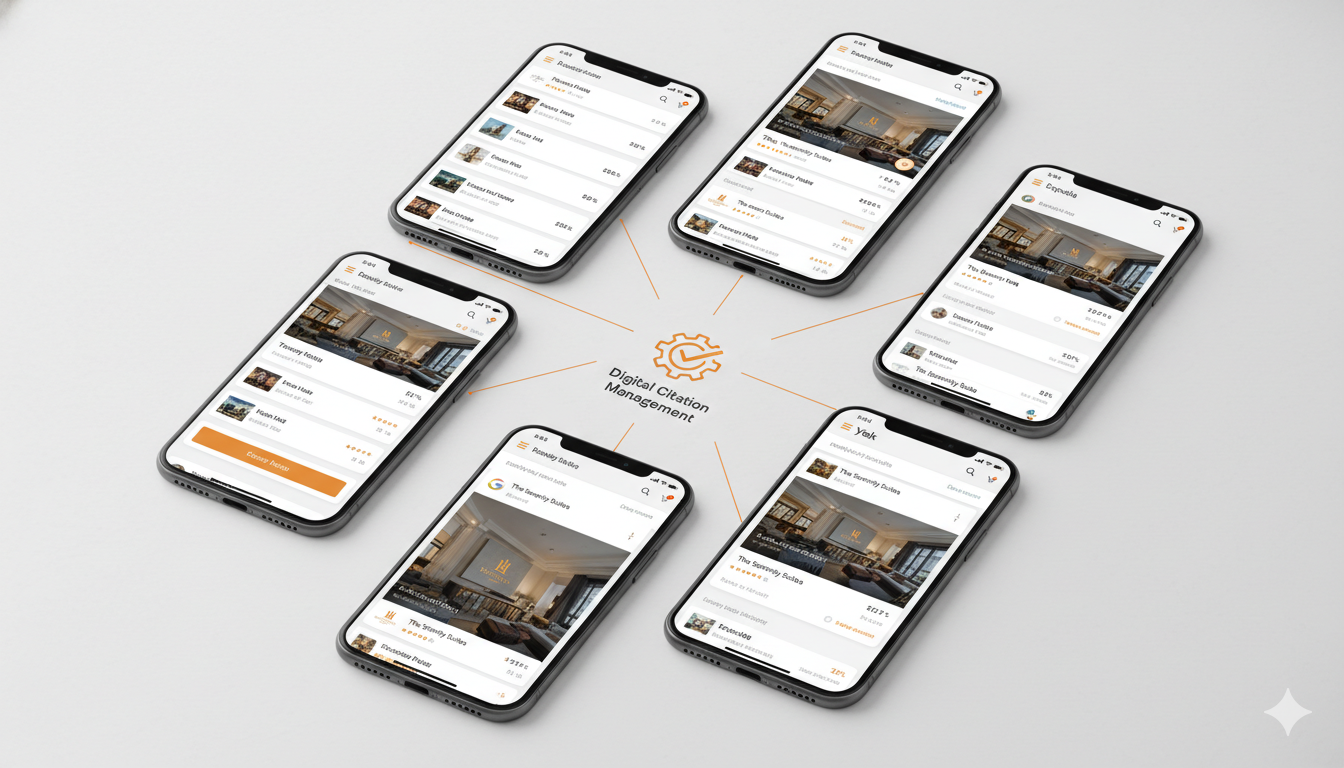
Citations mentioning your hotel's name, address, and phone number on external sites are digital vouchers for your business. Hotels should appear consistently on TripAdvisor, Booking.com, Expedia, Yelp, and Apple Maps. Each accurate citation reinforces the credibility signal Google is already checking through your Business Profile.
Audit existing citations regularly. If your address reads "123 Main Street" on your website and "123 Main St" on Booking.com, Google may treat these as two different businesses, which quietly damages your ranking and, further down the funnel, the direct hotel bookings that ranking is supposed to produce. This is unglamorous work, but it's part of the same hotel digital marketing foundation that everything downstream including your hotel metasearch marketing performance depends on.
Reviews: The Ranking Factor You Can't Skip
Reviews influence Google Maps ranking more than almost any other factor, and Google treats review volume and rating as a live confidence signal.
Make it easy for guests to leave reviews, checkout email links, review cards in rooms, front-desk prompts. Respond to every review, positive or negative. This signals engagement to Google and shows future guests that the hotel is responsive.
The Part Local SEO Doesn't Cover: Winning the Click Back From OTAs
Here's the number that changes the strategy: 72% of travelers now use a metasearch engine somewhere in their booking journey, comparing your rate against OTA rates for the same room, often within the same Google result that your local SEO worked to rank. Ranking on Maps gets you into that comparison. It doesn't decide who wins it.
This is where hotel metasearch marketing takes over from local SEO. Google alone holds an estimated 55–60% of the global metasearch market, and industry data from D-EDGE puts Google's share of ad-driven direct booking revenue at 61%, a proportion that's held steady since 2020. Google's free booking links which don't require paid bidding deliver an estimated 25–35% incremental direct bookings on top of whatever paid metasearch campaigns already bring in.
The economics explain why this matters more than most hotels realize. A €600 booking through an OTA at 18% commission costs roughly €108. The same booking won through metasearch can cost as little as €20–€60 depending on market and bidding model because the guest was already comparing prices for your specific hotel. You're not paying to get noticed; you're paying not to lose someone who already wanted you.
How Google Hotel Ads and Metasearch Actually Work
The starting point for metasearch for hoteliers is understanding what the channel actually does: a metasearch engine doesn't sell rooms; it compares your rate across channels and charges for the click or booking it sends. The difference between an OTA and metasearch is who owns the guest afterward: on an OTA, the customer belongs to the OTA. On metasearch, if the click lands on your own site, the guest is yours email, stay history, and every future booking included.
What metasearch for hoteliers actually requires to work:
- A connected booking engine with live rates and availability feeding Google Hotel Center
- Rate parity if your direct site shows a higher price than Booking.com inside your own metasearch module, the click goes to the OTA
- An accurate, complete Google Business Profile, since the metasearch module pulls directly from it
- Reliable conversion tracking, without which there's no way to optimize spend
Commission-only bidding on Google Hotel Ads was sunset in 2025 2026 planning now works around Enhanced CPC, Target ROAS, or Performance Max for travel goals instead, which ties metasearch performance into a hotel's broader Google Ads activity through a single booking-conversion signal.
Building a Practical Metasearch for Hoteliers Budget
This is the part most metasearch for hoteliers guides skip: a workable budget split, not just a list of platforms. For a typical independent property, a reasonable starting allocation looks like this: Google Hotel Ads should take 60–75% of total metasearch spend, given Google's dominant market share and its free-booking-link tier that no competitor matches at comparable volume. Trivago, which holds 10–20% global share concentrated in DACH and southern Europe, is worth a smaller allocation unless your guest mix skews European. TripAdvisor typically earns 5–15%, more if your guests rely heavily on review-led discovery.
Getting this allocation right is one of the more concrete, repeatable pieces of hotel metasearch marketing; it's a starting point to test against your own booking data, not a fixed rule.
One more number worth keeping in front of ownership when a metasearch for hoteliers budget gets questioned the distribution cost comparison:
| Channel | Typical cost |
|---|---|
| Direct organic (SEO) | 2–5% CPA |
| Direct via email/CRM | 2–4% CPA |
| Direct via metasearch | 8–14% CPA |
| Direct via paid search | 10–18% CPA |
| OTA standard program | 15–22% commission (25–35% true cost) |
| OTA preferred program | 20–28% commission (30–42% true cost) |
Properties with automated rate-parity management see 25–40% higher click-through rates and 15–20% better conversion on metasearch than those without it parity isn't a legal housekeeping item, it's a direct conversion lever.
Keyword Optimization and Website Readiness
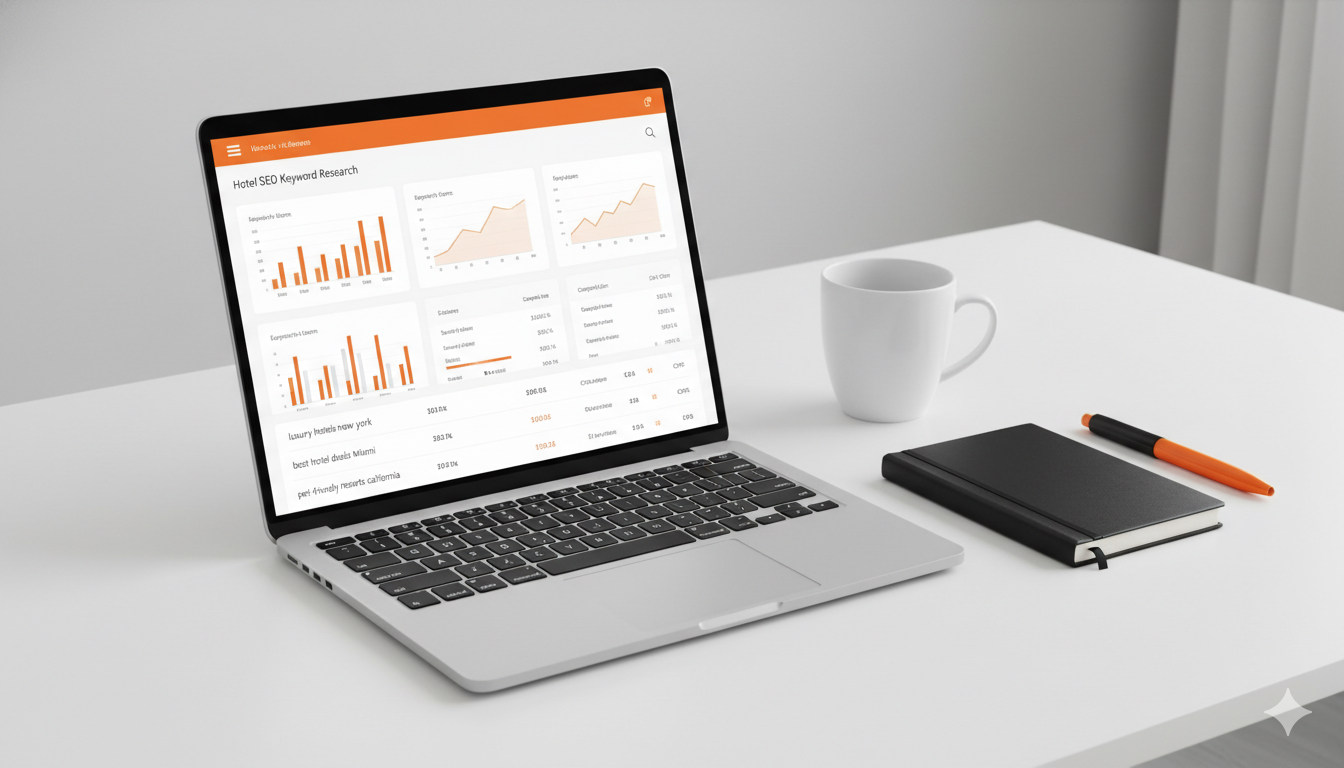
Local search keywords still matter to hotel digital marketing performance, but only in service of a human-readable page Google penalizes obvious keyword stuffing. Build location-specific landing pages ("Hotel Near the Train Station") that genuinely inform, not just target a phrase.
None of this metasearch strategy works on a slow site. Metasearch traffic is high-intent by definition the traveler was already comparing your rate but a booking engine that's slow to load turns a won click into a lost booking. Mobile performance isn't optional; most hotel searches, and nearly all metasearch clicks, happen on a phone.
Local Link Building and Partnerships
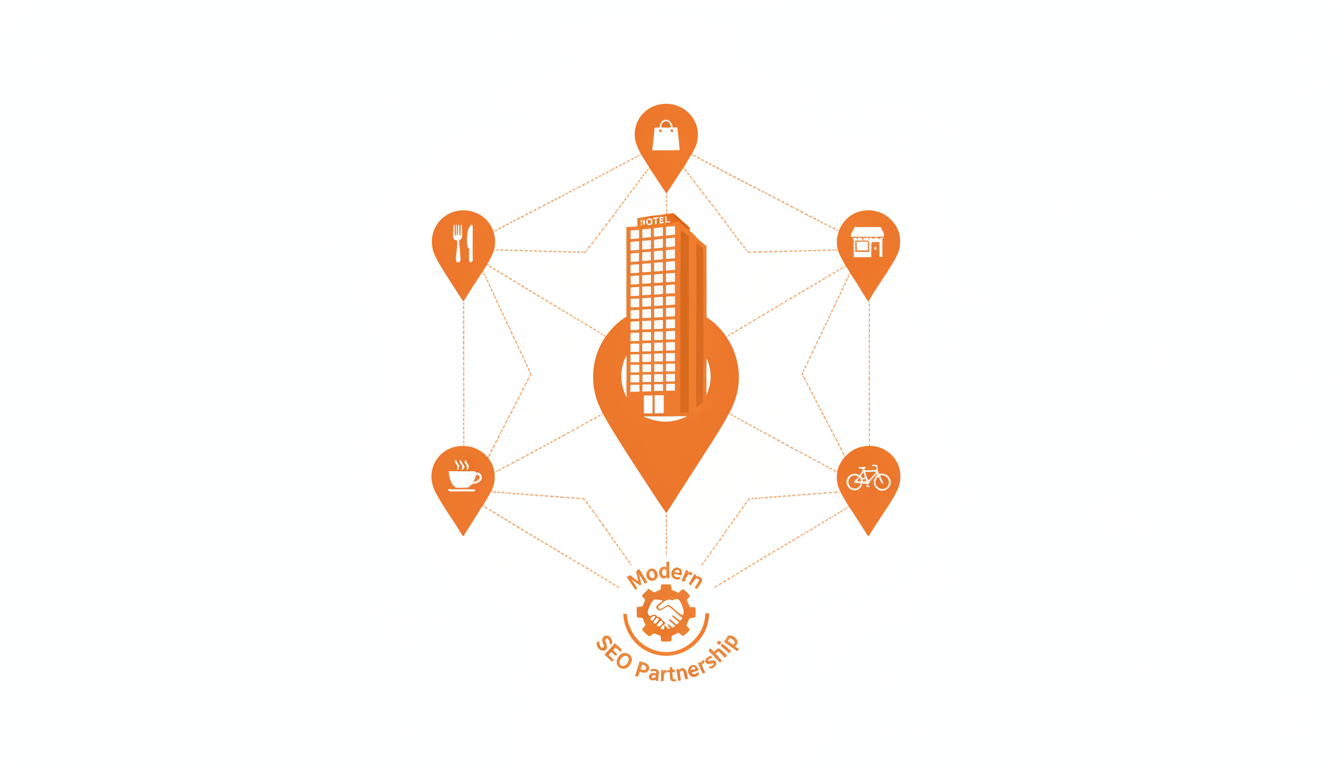
Links from local businesses signal credibility to both traditional and local search ranking, and they compound with the rest of a hotel's digital marketing footprint over time. Partner with nearby attractions, restaurants, and tourist sites for natural link exchanges. Local press coverage and event sponsorships build the same kind of authority signal, alongside genuine brand awareness.
The Combined Strategy: Visibility, Then Conversion
Local SEO and hotel metasearch marketing aren't competing budgets; they're sequential layers of the same funnel. Organic and Maps visibility get a hotel found for free. Metasearch and Google Hotel Ads catch that same traveler at the exact moment they're comparing your rate against an OTA's. A strong direct booking engine converts the click once it's won. Skip the first layer and metasearch spend gets expensive, because paid clicks are doing the work organic visibility should be doing for free. Skip the second and a well-ranked hotel still loses the majority of its clicks to the OTA sitting inside its own Google result.
At revmerito, this is the gap we see most often in hotel digital marketing audits of properties that invested heavily in ranking on Google Maps but never connected a rate feed to Google Hotel Center, so every bit of that hard-won visibility still defaults the traveler to an OTA rate at checkout. Fixing that connection is usually the single highest-return change available to a hotel's direct channel.
Conclusion
Hotel Google Maps ranking depends on a complete Business Profile, consistent citations, strong reviews, and a mobile-ready website. That gets a hotel found, but visibility alone doesn't convert into direct hotel bookings. Turning that visibility into direct hotel bookings instead of an OTA commission depends on a second, connected strategy rate parity, a live Google Hotel Center feed, and a deliberate metasearch budget across Google, Trivago, and TripAdvisor. Treat the two as one funnel, not two separate projects, and the local SEO work starts paying back in bookings. You actually keep the margin on which is the entire point of pairing it with disciplined hotel metasearch marketing in the first place.
Frequently Asked Questions
Is local SEO still worth investing in if metasearch drives the actual booking?
Yes metasearch and Google Hotel Ads reward hotels that already have strong organic and Maps visibility, since a well-ranked, review-rich profile feeds directly into the metasearch module and lowers cost per click over time. Skipping local SEO makes every metasearch click more expensive.
What's the realistic split between local SEO and metasearch spend?
There's no universal number, but a hotel with a strong Google Business Profile and healthy reviews can typically run a leaner metasearch budget than one starting from a weak local presence, since paid clicks are compensating for visibility organic search should be providing.
Is rate parity really the make-or-break factor in metasearch for hoteliers?
Directly properties with automated rate parity see meaningfully higher click-through and conversion rates on metasearch than those without it, because a higher direct rate inside your own Google Hotel Ads module sends the booking to the OTA shown next to you.
How much of a typical metasearch budget should go to Google Hotel Ads specifically?
Roughly 60–75% for most independent hotels, reflecting Google's dominant metasearch market share and its no-cost free booking links tier, with the remainder split across Trivago and TripAdvisor depending on guest mix.
About revmerito: We are a leading hospitality solutions company specializing in integrated reputation management services and revenue optimization strategies. With deep expertise across India's diverse hospitality markets, we help hotels maximize guest satisfaction and revenue performance through data-driven strategies and professional guidance.